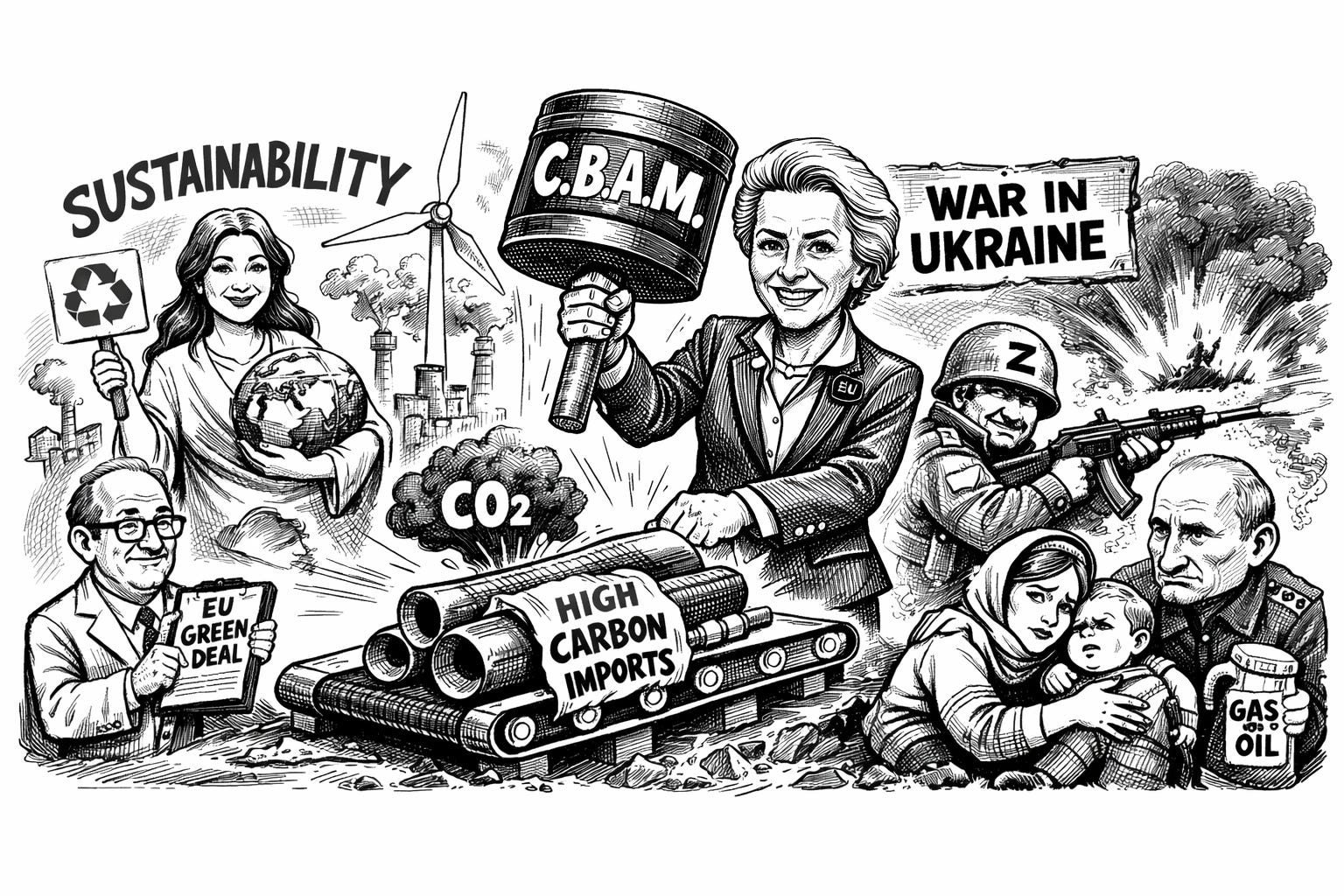
Corporate sustainability on LinkedIn has gone pandemic. The pollution is so widespread you cannot escape the corporate smog. Almost everyone is passionate about sustainability, whilst celebrating their growth strategy expertise. Consultants announce ESG certifications. Executives share circular economy thought leadership between posts cheering quarterly growth.
They are all marching to Netzero through energy addition and greater commitment to never-ending wars. The energy transition or global peace was never meant to be real. Do they even know the person who won the Nobel Peace Prize? The irrelevance is the dogma.
The platform has industrialised virtue signalling. Sustainability content generates engagement, feeds algorithms, surfaces more sustainability content. A closed loop of performative environmentalism disconnected from material impact.
The term itself now decorates every corporate report, policy document, and investment prospectus. It appears with such earnest solemnity that one might mistake it for actual commitment rather than what it demonstrably is: a lexical vaccine against accountability.
Ask whose sustainability we're discussing, and the answer becomes uncomfortable. Not the planet's. Atmospheric carbon concentrations continue their upward march regardless of how many companies achieve "carbon neutrality" through offset accounting fiction. Not the oceans', which acidify whilst fishing conglomerates tout sustainable sourcing. Not the soil's, which depletes beneath crops certified by sustainability standards.
The sustainability in question is corporate. Specifically, the sustainability of extraction.
Consider the structure. Mining companies publish sustainability reports whilst expanding operations that obliterate watersheds. Fashion conglomerates celebrate circularity whilst increasing production volume. Technology firms achieve environmental credentials whilst manufacturing devices designed for obsolescence.
This isn't hypocrisy. Hypocrisy requires claiming one thing whilst doing another. These organisations claim exactly what they're doing. They're sustaining themselves. Ecological sustainability doesn't produce enhanced annual bonuses or ballroom awards.
The frameworks confirm it: GRI, SASB, TCFD. Each bases reporting on what hurts investors least. None ask how operations threaten ecological systems. The reporting entity remains central. The biosphere is reduced to mere context.
Sustainability departments report to chief financial officers. Executive compensation ties to growth metrics, not absolute pollution reductions. Supply chain audits stop at tier one suppliers. They avoid visibility into actual extraction sites. Inconvenient realities might demand inconvenient responses.
The language betrays it. "Sustainable growth" is oxymoronic if sustainability means living within regenerative limits. Growth requires increased throughput. Sustainability requires staying within boundaries. Opposed concepts. Yet the phrase appears constantly in documents produced by communications professionals who understand perfectly well what words mean.
They mean what they're meant to mean. Sustainability credentials permit continued extraction without consequences. They provide marketing content and investor material. They consolidate market control; compliance costs small competitors cannot afford separate the viable from the disposable. They position corporations not as the problem but as its solution. Governments write cheques.
The mechanism is familiar. Create the appearance of addressing a problem whilst avoiding any action threatening the systems generating it. Hire consultants. Adopt voluntary standards. Issue press releases. Collect awards. Continue operations.
Meanwhile, material reality proceeds. Topsoil depletes. Aquifers drop. Insect populations collapse. Ocean pH falls. Not problems solved by better reporting frameworks.
Notice what's absent. Actual emissions reductions. Absolute consumption figures. Supply chain transparency. Discussion of degrowth or consumption limits. Anything threatening business models.
Instead: awards, conferences, partnerships, frameworks, targets, roadmaps. An entire apparatus of credentials and commitments that demands nothing but performance.
How many of these corporate sustainability experts have anything to say about the European Union's CBAM? Almost none. The Carbon Border Adjustment Mechanism requires actual accounting of embedded emissions in imported goods. It threatens cost structures, supply chain arrangements, profit margins. The LinkedIn cheerleaders celebrate voluntary frameworks and offset purchases.
CBAM is mandatory, enforced, and exposes where emissions actually occur. The EU wants it exposed. Makes them feel good about being climate moralists. Meanwhile they burn billions keeping a war alive, more than a million dead, and no real audits. Definitely no carbon audits.
CBAM is worse than Trump's tariffs. Trump's tariffs are shameless naked orange protectionism. CBAM masquerades as climate policy. It functions as trade barrier favouring European producers. Producers who've already offshored their dirtiest production. It penalises developing economies for manufacturing goods European consumption demands. Then frames the penalty as a moral responsibility.
CBAM rewards whoever controls measurement standards and verification processes. Consultancies and certification bodies positioned in European markets capture compliance revenue whilst exporters bear costs. Trump's tariffs don't pretend. CBAM wraps protectionism in climate credentials, making it politically untouchable.
The silence of experts is diagnostic. Corporate sustainability thrives on voluntary performance. Mandatory compliance exposes the performers.
The question on whose sustainability it is demands precision. This sustainability sustains extraction, not ecosystems. Market access, not biodiversity. Investor confidence, not physical systems supporting life.
Corporate sustainability is working exactly as designed.
Just not for the planet.